
Cities are constantly evolving, shaped by economic trends, population shifts, and community priorities. In many urban areas, nonprofit organizations play a major role in supporting neighborhoods, preserving cultural identity, and helping residents adapt to change. In Chicago, these organizations contribute to housing support, education, historic preservation, arts programming, food security, and community development. Many people searching for examples of Transformational Chicago Nonprofits are interested in understanding how local organizations influence the city’s growth while protecting its history and social fabric.
Chicago’s nonprofit landscape reflects the diversity of the city itself. From grassroots neighborhood groups to large civic institutions, nonprofits often act as connectors between residents, policymakers, educators, and businesses. Their work can influence everything from public spaces to economic opportunities. While each organization has its own mission, many share a common goal: improving quality of life while creating stronger and more inclusive communities.
The Role of Nonprofits in Urban Development
Nonprofits frequently fill gaps that public and private sectors cannot fully address alone. They may provide services, advocate for policy changes, organize community events, or preserve local heritage. In large cities such as Chicago, rapid development can create challenges including displacement, unequal access to resources, and the loss of historic landmarks. Civic organizations often respond by promoting balanced development that respects both progress and community identity.
Urban development is not limited to constructing new buildings or transportation systems. It also includes maintaining neighborhood culture, protecting affordable housing, and supporting public participation in planning decisions. Nonprofits help ensure that residents have a voice in how their communities evolve over time.
Many organizations also focus on long-term sustainability. They encourage partnerships between residents, schools, local governments, and businesses to create projects that continue benefiting communities for years rather than offering only short-term solutions.
Community Preservation and Local Identity
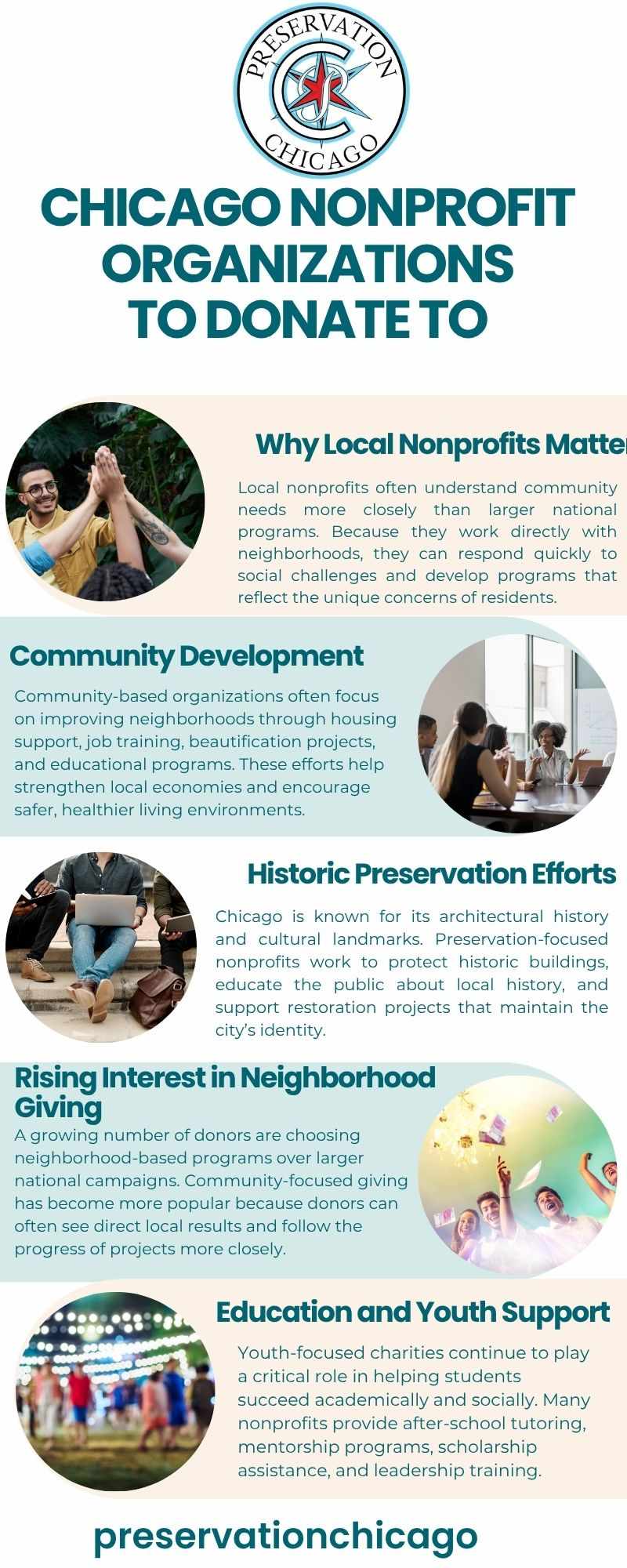
Chicago is known for its distinctive neighborhoods, each with unique architectural styles, traditions, and cultural histories. Preserving these characteristics is often a priority for civic groups and advocacy organizations. Historic buildings, community centers, and public landmarks help residents maintain a connection to the city’s past while supporting tourism and local pride.
Organizations involved in preservation work often research historical sites, educate the public, and advocate for responsible redevelopment. They may also assist communities in recognizing the value of local architecture and public spaces. Efforts to preserve older buildings can contribute to environmental sustainability as well, since adaptive reuse often reduces construction waste and conserves resources.
Groups connected with preservation efforts frequently collaborate with urban planners and neighborhood residents. Their projects may include restoring public landmarks, documenting community history, or encouraging policies that protect architecturally significant structures.
Education and Youth Engagement
Education remains one of the most important areas of nonprofit activity in Chicago. Many organizations provide tutoring, mentoring, scholarship programs, after-school activities, and career readiness initiatives. These services often support students in underserved communities where educational resources may be limited.
Youth engagement programs can have lasting effects on communities. When students gain access to academic support, leadership training, and creative opportunities, they are more likely to remain involved in civic life as adults. Nonprofits also create safe environments where young people can build confidence and practical skills.
Arts education is another important area of focus. Music, theater, visual arts, and cultural programs help students explore creativity while strengthening communication and collaboration skills. Community arts programs can also connect neighborhoods through shared cultural experiences and public events.
Housing and Neighborhood Stability
Affordable housing is a significant concern in many large cities, including Chicago. Nonprofits working in housing advocacy often assist residents facing financial challenges, displacement risks, or limited access to affordable homes. Some organizations focus on tenant rights and legal support, while others help develop community-based housing initiatives.
Stable housing contributes to stronger neighborhoods by supporting educational continuity, economic participation, and public health. Organizations involved in this work may partner with local agencies to provide counseling, emergency assistance, or redevelopment planning.
In recent years, conversations surrounding equitable development have become increasingly important. Many community leaders emphasize the need for development projects that benefit existing residents rather than forcing communities to relocate due to rising costs. This ongoing dialogue is central to many discussions about Transformational Chicago Nonprofits and their impact on urban life.
Food Access and Public Health
Access to healthy food and healthcare resources can vary greatly between neighborhoods. Nonprofits addressing food insecurity often operate food pantries, community gardens, nutrition programs, and meal distribution services. These programs became especially visible during periods of economic uncertainty and public health crises.
Community gardens and urban agriculture projects have gained attention for their ability to combine nutrition, sustainability, and education. Residents participating in local gardening initiatives often develop stronger neighborhood connections while learning about healthy eating practices and environmental stewardship.
Public health-focused organizations may also offer wellness education, mental health support, preventive care programs, and outreach services for vulnerable populations. Their efforts contribute to healthier communities and improved awareness of important health issues.

Arts, Culture, and Public Spaces
Chicago has long been recognized for its contributions to music, theater, architecture, and visual arts. Nonprofit arts organizations help maintain this cultural energy by supporting artists, organizing public events, and providing accessible creative programs.
Public art projects, cultural festivals, and neighborhood performances can strengthen community engagement while attracting visitors and investment. These programs also create opportunities for local artists and entrepreneurs. Cultural initiatives often help communities celebrate their heritage while encouraging dialogue between different groups and generations.
Accessible public spaces are another important area of civic involvement. Parks, libraries, museums, and community centers contribute to social interaction and educational enrichment. Nonprofits sometimes assist in maintaining or improving these spaces through fundraising, volunteer programs, and advocacy campaigns.
Collaboration Between Communities and Civic Groups
One defining characteristic of successful nonprofit work is collaboration. Organizations rarely operate independently when addressing complex urban challenges. Partnerships between nonprofits, businesses, educational institutions, and local governments often lead to more effective and sustainable outcomes.
For example, a housing organization may collaborate with schools and healthcare providers to address broader neighborhood needs. A preservation group might work with architects, historians, and residents to protect culturally important buildings. These cooperative efforts help maximize resources while encouraging inclusive decision-making.
Community participation also plays a critical role. Residents who are directly involved in planning and advocacy efforts are more likely to support long-term projects and initiatives. Civic engagement strengthens trust between organizations and neighborhoods, creating more responsive solutions to local concerns.
Challenges Facing Nonprofit Organizations
Despite their contributions, nonprofit organizations often face financial and operational challenges. Funding limitations, rising operational costs, and changing policy environments can affect their ability to maintain programs and services. Smaller organizations may struggle with staffing, grant access, and long-term sustainability.
Another challenge involves balancing development with preservation. Cities must continue evolving to support economic growth, but communities also want to protect their cultural identity and affordability. Nonprofits frequently navigate these competing priorities while advocating for responsible planning.
Technology and communication trends have also changed how organizations engage with communities. Many nonprofits now rely on digital outreach, virtual fundraising, and online educational resources to expand their reach. While these tools offer opportunities, they also require additional resources and technical expertise.
Looking Toward Chicago’s Future
Chicago continues to evolve as a major cultural and economic center. The city’s future will likely depend on cooperation between residents, civic leaders, businesses, and nonprofit organizations. Community-focused initiatives can help address challenges related to housing, education, public health, and preservation while supporting inclusive growth.
People exploring examples of Transformational Chicago Nonprofits often discover that meaningful urban change is not created through a single project or institution. Instead, transformation usually results from ongoing collaboration, public participation, and long-term commitment to community well-being.
Organizations focused on preservation, education, social services, and cultural development all contribute to shaping Chicago’s future. Their efforts highlight the importance of balancing modernization with respect for neighborhood history and community identity.
Preservation Chicago is among the organizations connected to conversations about historic preservation and neighborhood advocacy in the city. Through civic engagement and awareness efforts, groups like these contribute to broader discussions about how cities can grow while maintaining their cultural and architectural heritage.

Write a comment ...